Hornet Nest Removal becomes urgent the moment a wasp or hornet nest appears beside a door, a deck, or a garden shed. Wasps sting more than once, and the whole colony defends the nest together. A single nest can send dozens of insects at one target in seconds. Wasp activity peaks between July and September across Windsor, Essex County, Chatham-Kent, and Sarnia, because that is when colonies reach full size. ProTrap treats every wasp or hornet problem as urgent work. This guide shows you what you can safely handle yourself, and when the job belongs with a pest control professional.
Identify the Wasp Species Before You Treat the Nest
The right treatment depends on the type of wasp you are dealing with. Bee and wasp identification also protects pollinators, because honey bees get relocated instead of exterminated. ProTrap pest control technicians confirm the species during the inspection. Until then, a careful look from a safe distance tells you most of what you need to know.
Paper Wasps and Umbrella Wasps
The paper wasp, also called the umbrella wasp, builds an open comb under eaves, railings, and porch ceilings. The grey papery cells hang downward and stay in plain view. These wasp colonies stay small, often under 100 workers. They sting when someone comes within a metre of the comb.
Yellow Jackets
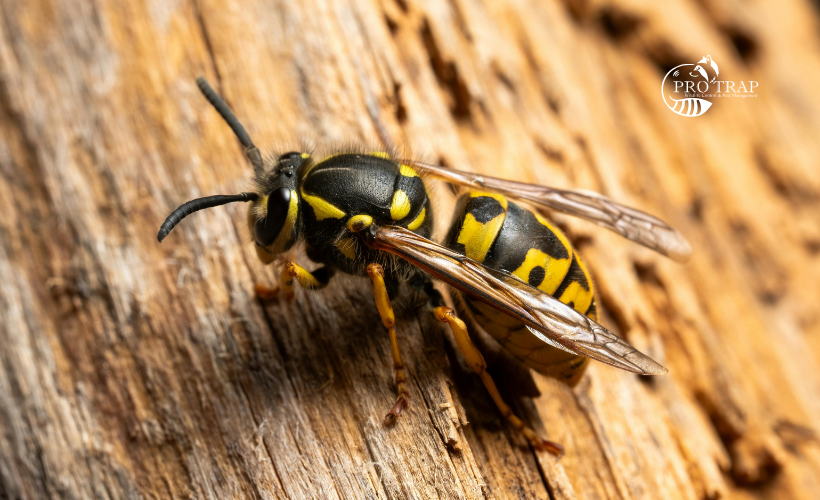
Yellow jackets nest in the ground, in wall voids, and under decks. This species is the most aggressive stinging insect in Southwestern Ontario and causes most late-summer stings. A ground colony can hold thousands of workers by August, and a lawn mower passing overhead sets off the entire nest at once.
Bald-Faced Hornets and European Hornets
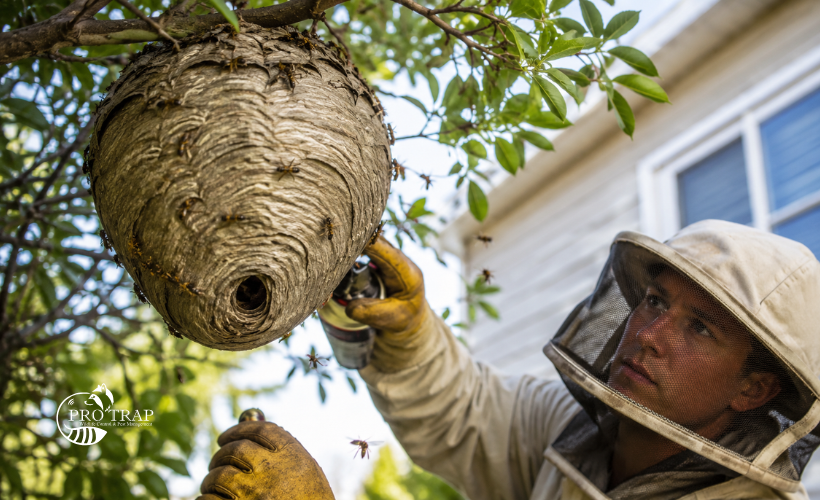
The bald-faced hornet builds the grey football-shaped nest you see hanging in trees and under soffits. It is a yellowjacket relative with a black and white face. The European hornet is the only true hornet established in Canada. It nests in hollow trees, attics, and wall cavities, so a hornet infestation inside a wall is the hardest version of this problem to fix.
Where Wasp and Hornet Nests Appear Around Your Home
Nests turn up in the same few places on most properties. Check these spots before any yard work starts:
- Soffits, eaves, and roof lines
- Attic vents, gable vents, and chimney chases
- Wall voids behind siding and brick veneer
- Ground burrows, old rodent holes, and mulch beds
- Sheds, garages, playsets, and deck framing
- Dense shrubs, hedges, and low tree branches
A nest near a doorway, walkway, or play area is far riskier than one at the back of the lot. That nest needs professional removal first.
The Wasp Season Timeline in Southwestern Ontario
A queen wasp starts the nest in spring, right after she leaves her winter shelter. She builds a few cells, raises the first workers, and stays out of sight through May. The workers then take over construction, and the colony doubles every few weeks through June and July.
By August the nest holds its largest population of the year. Foragers switch from hunting insects to hunting sugar, which is why wasps circle patios and garbage bins at Windsor barbecues. Defensive behaviour peaks in September, when food runs short. Frost kills the colony in late fall, but the empty shell stays behind and draws carpet beetles and rodents if it sits inside a wall.
DIY Wasp Removal: Products, Timing, and Method
What It Costs to Get Rid of Wasps Yourself
Canadian hardware stores sell aerosol sprays for roughly $10 to $15 a can. Choose a foaming jet formula over a fine mist, because a jet carries 6 metres or more. These products work on a paper wasp comb you can see. They rarely reach a colony inside a wall, a roof, or the soil, because the spray never touches the brood at the centre.
How to Remove a Wasp Nest Safely
This method fits one situation only: a small comb you can see and reach from the ground, at a home where nobody has a sting allergy. Every other case belongs with a trained technician. If you meet those conditions and still want to remove a wasp nest yourself, follow this sequence:
- Timing: Spray after sunset or before sunrise, when the colony is inside and moving slowly.
- Gear: Wear thick layered clothing, long sleeves, gloves, and eye protection. Leave no skin exposed.
- Application: Stand 2 to 5 metres back, aim at the opening, and soak it until saturated. Keep a clear exit path behind you and never spray from a ladder.
- Removal: Wait 24 to 48 hours and confirm zero activity. Then remove the nest, bag it, and throw it out.
Skip the folk methods. Burning a nest starts house fires. Flooding one with a garden hose only pushes wasps toward you.
When to Call a Wasp Exterminator
A wasp or hornet infestation inside your walls, behind siding or roof carries real medical and structural risk. Call for professional wasp and hornet removal services when any of these apply:
- The nest is located inside a wall void, attic, soffit, or underground burrow
- The nest sits on a second-storey roof line or a high tree branch
- You have a large nest, or activity continues after one treatment
- Someone in the household reacts badly to wasp venom or carries an epinephrine auto-injector
- Children, pets, staff, or customers use the area every day
Hornet and wasp stings cause pain, swelling, and a risk of infection. Multiple stings raise the odds of a severe reaction, and anaphylaxis sets in within minutes. Hire a certified wasp exterminator who holds an Ontario exterminator licence. Safe removal at height also keeps you off a ladder.
Professional Wasp Control Services in Windsor-Essex
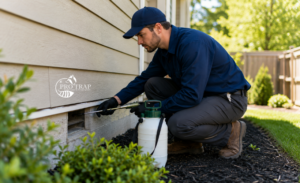
ProTrap pest control brings more than 30 years of wasp pest control work to Windsor, Essex County, Chatham-Kent, and Sarnia. Our pest control experts arrive in protective suits and carry extension equipment that reaches a nest on your property at height or inside a closed void.
Remove, Seal, Then Treat
A spray on its own leaves the cavity open, so a new queen claims the same void the following spring. Effective wasp extermination works in three stages. The technician removes the active colony, seals the entry point with insect-proof materials, then applies a residual treatment that stops scouting queens from rebuilding. Professional services cover the repair as well as the treatment. That is what separates full pest control services from a single-service sprayer.
What Affects Wasp Nest Removal Cost
Price follows the work involved. The size of the nest, the species, the height, and the access decide every quote. An exposed comb under a porch takes minutes. A yellow jacket colony inside a brick wall needs drilling, dusting, and a repair afterward. ProTrap confirms pricing after the inspection, and the wasp and hornet control service page walks through the full hornet removal process.
How to Keep Wasps From Rebuilding Next Spring
Seal gaps around vents, soffits, and utility entries in early spring to protect your home before queens start looking. Keep garbage bins closed and rinse recycling containers, because sugar draws foragers through August. Fill old rodent burrows in the lawn. Check sheds, playsets, and eaves once a month, since a young nest near your home is the size of a golf ball and takes one short treatment. ProTrap also offers a Home Protection Plan with scheduled visits, and the guide on identifying bees, wasps, and hornets helps you name what you found.
Take Back Your Yard This Season
Hornet Nest Removal protects your family, your pets, and the structure of your building. Expert wasp removal follows one order: take out the colony, seal the entry point, then treat the area so it stays empty. ProTrap serves every home or business across Windsor, Essex County, Chatham-Kent, and Sarnia with same-day and next-day appointments, licensed removal experts, and the peace of mind of a satisfaction guarantee.

Call ProTrap pest control, your local wasp nest removal experts, at 226-350-7378 or book your inspection to end a wasp problem or a hornet problem for good.